50% off your first month — ends in00d00h00m00s
Photography · Academy9 min readUpdated 

Best AI Prompts for Cinematic Portrait Photography

Copy-ready film-still prompts with exact lens, lighting, and color grade so your portraits look shot on set, not generated.

Martin Balk
Martin Balk
Founder, Postcrest ·
4.8 · 38,000+ creators
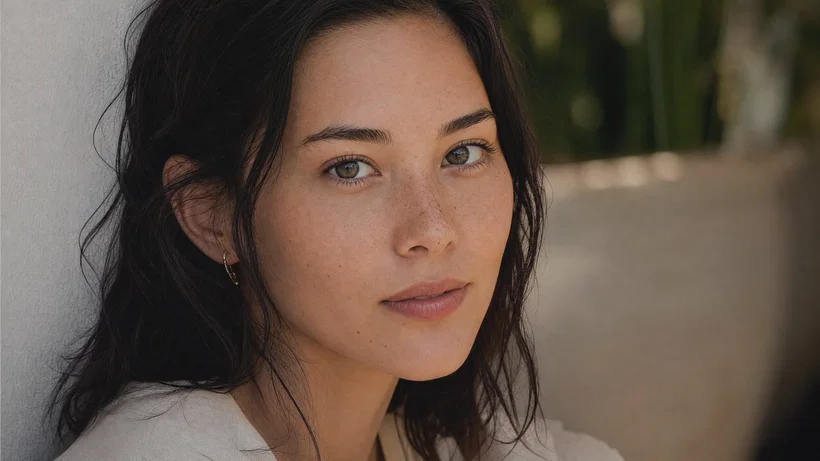
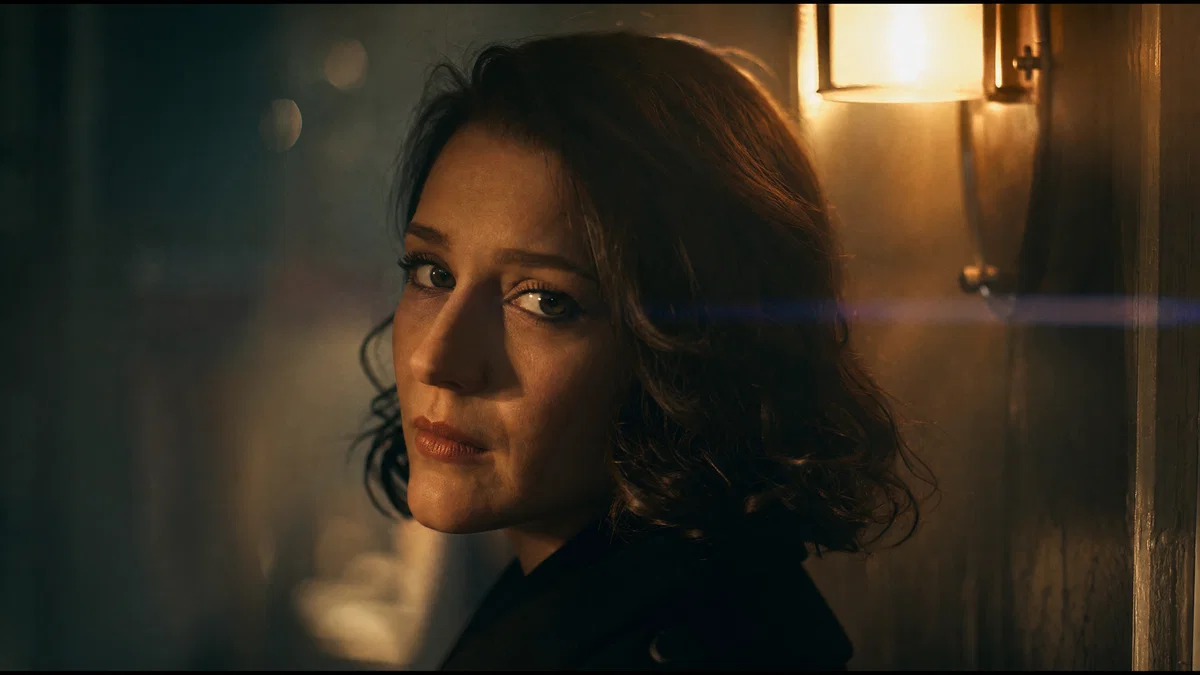
Moody close-up portrait with practical tungsten light and subtle anamorphic flare.
10 ready-to-copy prompts
Generated with Postcrest · 1 prompt · 1 click
TL;DR
Key Takeaways
  • 01
    Write prompts like a call sheet Lead with shot type, focal length, aperture, then specify practical lights and the final color grade to get a true film-still look.
  • 02
    Control mood with practical light sources Name the on-set fixtures (neon, sconce, projector, dashboard) and their direction so the model anchors shadows and highlights correctly.
  • 03
    Lock the look with film stock and grade Pair a film-stock look with a clear grade cue (teal-and-orange, tungsten warmth, crushed blacks) to keep skin tones and contrast consistent.

Cinematic AI portrait prompts that look photographed

A good cinematic AI portrait prompt is a film-still-style portrait brief that names the production details a real shoot would: shot type, 35mm to 85mm lens, f/1.4 to f/2 aperture, practical lighting, medium, and a final grade. Modern image models learn from huge libraries of captioned photographs where captions describe those same details, so prompts that mirror that vocabulary reliably trigger the right depth of field, shadow shape, and highlight rolloff. When you specify a key light direction, a motivated practical source, and a film stock look, you stop getting generic “pretty faces” and start getting believable movie lighting.

Below are 10 ready-to-paste cinematic portrait photography prompts, each written like a working film still prompt with the lens, lighting, and grade baked in. You will cover low-key Rembrandt portraits, neon-noir street scenes, golden-hour backlight close-ups, anamorphic close-ups, and gritty interior setups for a true movie-style photo. Copy any prompt and paste it into Postcrest once, then iterate by swapping location, wardrobe, and time of day without losing the look.

Try it in Postcrest

Generate cinematic portraits you can publish

Render multiple variations in minutes, then upscale and export high-resolution images for print or social. Commercial license included, no watermarks.

No watermarksCommercial licenseCancel anytime
Image Generator
Postcrest
Prompt
Ultra-wide alpine peaks at golden hour, 16mm, f/11, Velvia 50
Generate
4K3:2
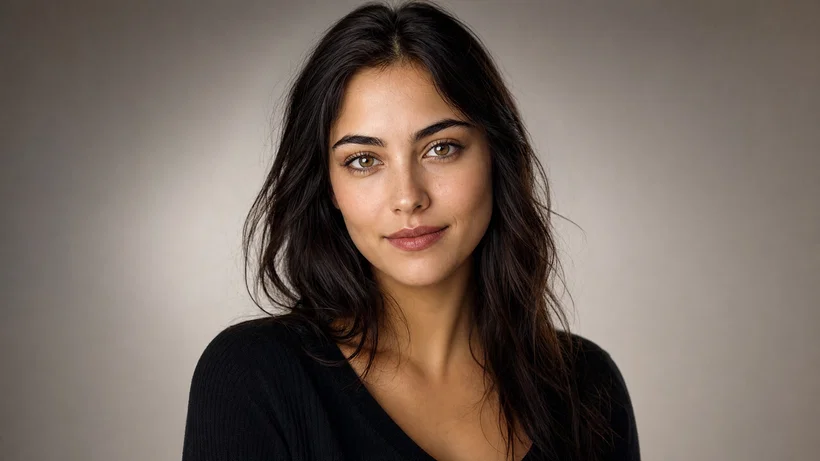
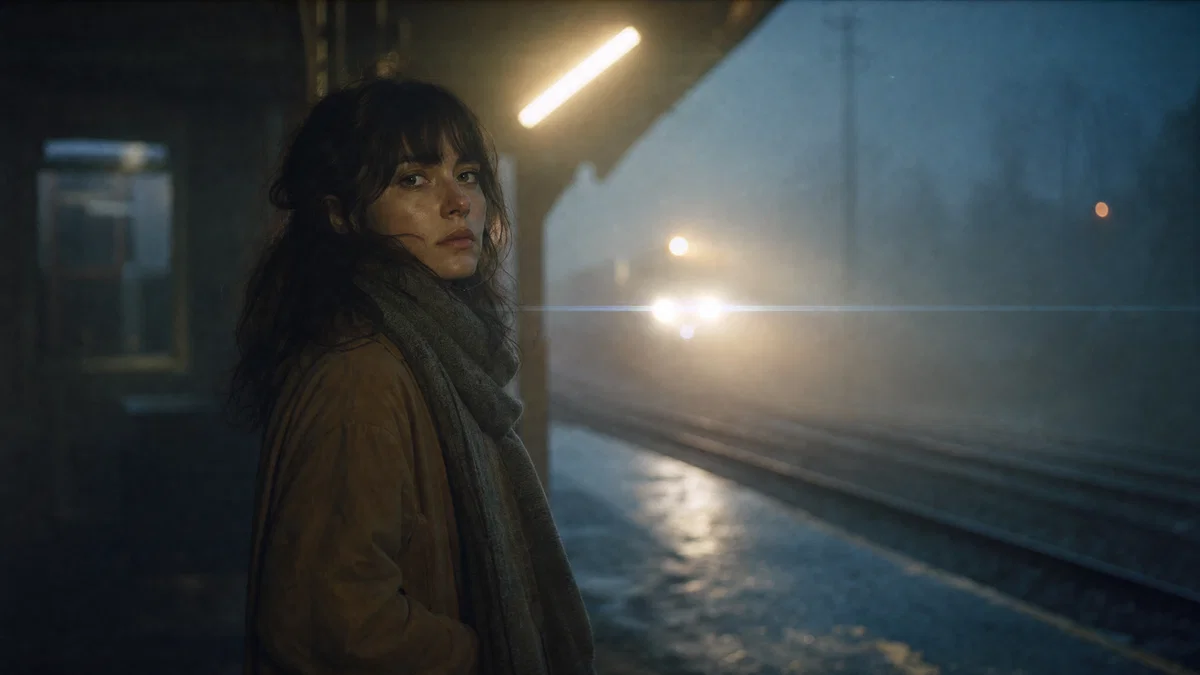
Cinematic blue-hour platform portrait with mist, practical lights, and anamorphic flare.
Generated · 4K
10 prompts

The prompt library

Every prompt below has been generated, graded and verified inside Postcrest. Copy the text, hit Generate, and the same look ships from your account.

Prompt 01 of 10

Low-key Rembrandt

Noir · shadow sculpted
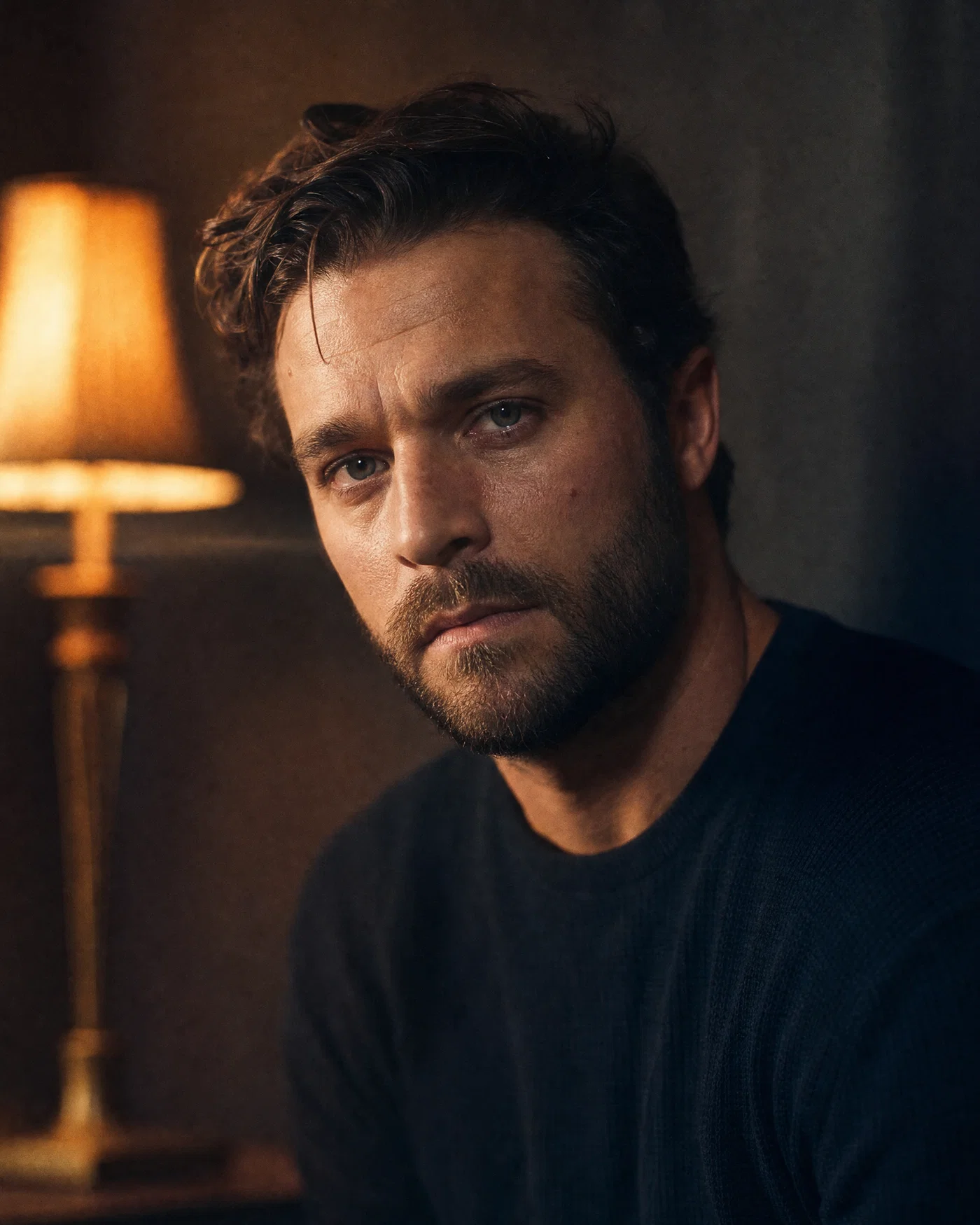
Low-key Rembrandt portrait lit by a tungsten lamp with deep shadows and soft falloff.
01·Noir · shadow sculpted
View photo
85mmf/1.8Practical tungstenPortra 400
Prompt
Tight head-and-shoulders portrait, 85mm lens, f/1.8, subject seated near a dark wall, eyes to camera, single practical tungsten table lamp as motivated key at 45 degrees, negative fill on the shadow side, faint haze for a restrained horizontal anamorphic flare, deep background falloff, *Portra 400* film stock look, warm highlights with slightly cool shadows grade.
Why it works

Leading with focal length and aperture forces shallow depth of field and compression that reads like a real portrait lens. Naming a motivated practical key and negative fill tells the model exactly where to put the shadow edge, which is what sells low-key cinema lighting.
Prompt 02 of 10

Neon-noir alley

Neo-noir · wet asphalt
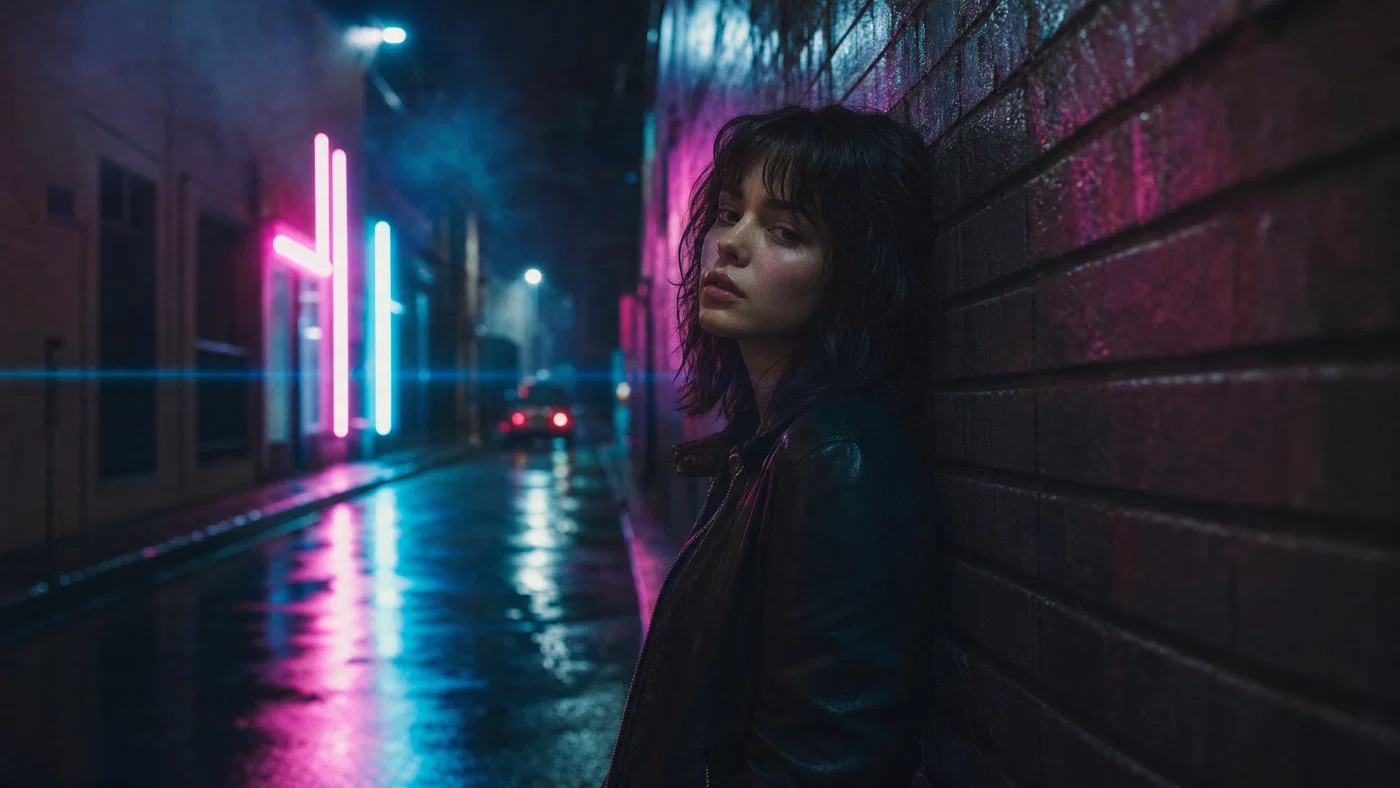
Neon-noir alley portrait with wet reflections, mist, and bright horizontal anamorphic flare.
02·Neo-noir · wet asphalt
View photo
35mmf/1.4Neon practicalsVision3 500T
Prompt
Three-quarter portrait, 35mm lens, f/1.4, subject leaning against a brick wall in a narrow alley, rain-slick pavement reflecting signage, practical neon as side key plus a dim overhead streetlight as fill, visible mist for a strong horizontal anamorphic flare streak, background bokeh from distant cars, *Vision3 500T* film stock look, cyan-magenta neon with crushed blacks grade.
Why it works

The 35mm wide portrait keeps environment and perspective tension, which is a core neo-noir cue. Calling out wet reflections, neon as a motivated key, and a flare streak gives the model specific light behavior to render, making the scene read like a movie still.

Prompt 03 of 10

Golden-hour backlight

Romance · sun flare
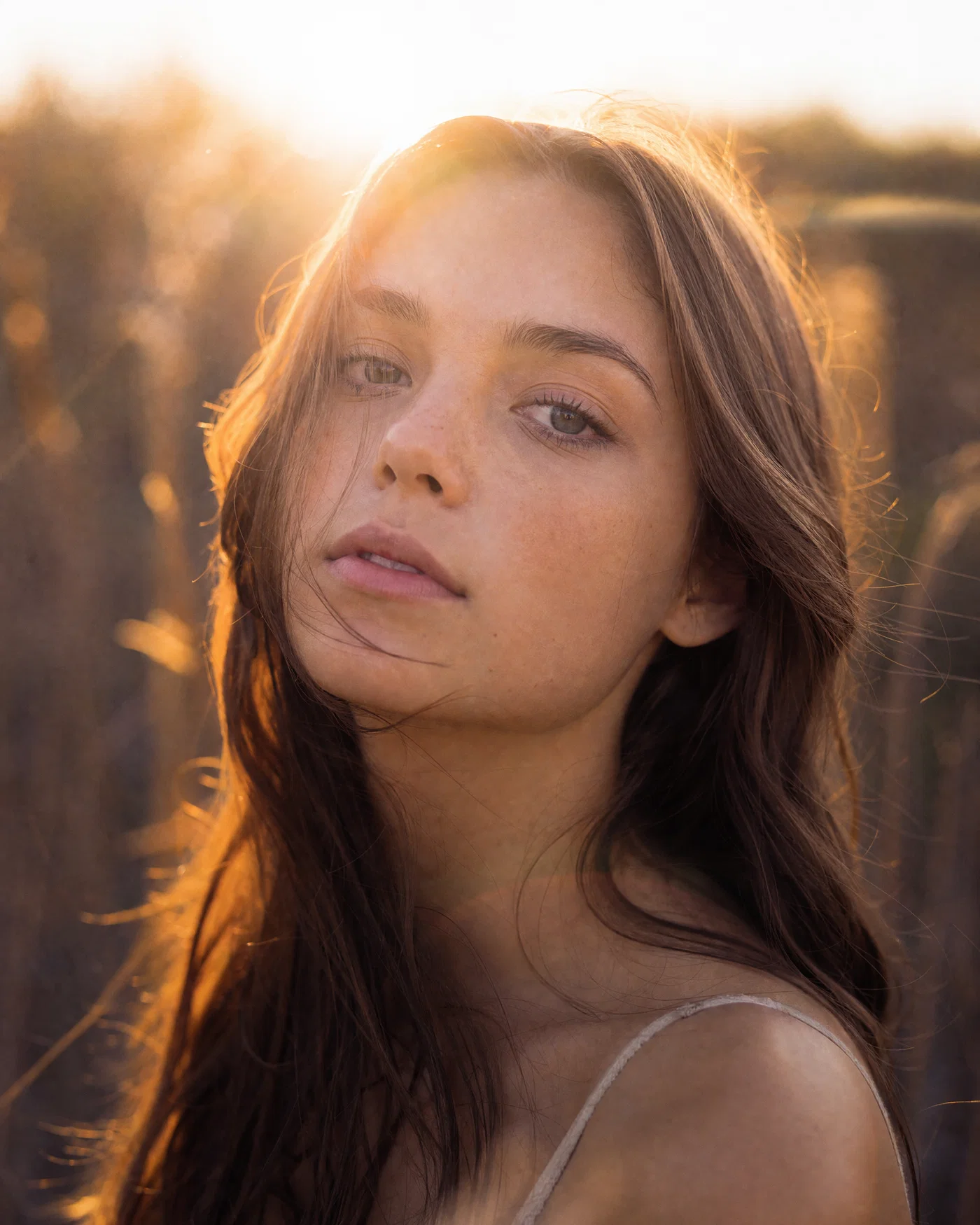
Backlit golden-hour close-up with rim light, reflector fill, and soft film-like flare.
03·Romance · sun flare
View photo
85mmf/1.4Backlit golden hourPortra 400
Prompt
Close-up portrait, 85mm lens, f/1.4, subject outdoors in tall grass, chin slightly up, sun low behind the head for strong rim light, practical silver reflector as soft fill on face, gentle hair movement, soft haze to bloom highlights and create a clean anamorphic flare, creamy background bokeh, *Portra 400* film stock look, warm golden highlights with soft pastel shadows grade.
Why it works

Backlight plus a named fill source is the fastest way to get believable skin while keeping cinematic separation from the background. The haze and flare callout tells the model how to roll off highlights, which prevents harsh, digital-looking edges.

Prompt 04 of 10

Anamorphic close-up

Film still · widescreen intimacy
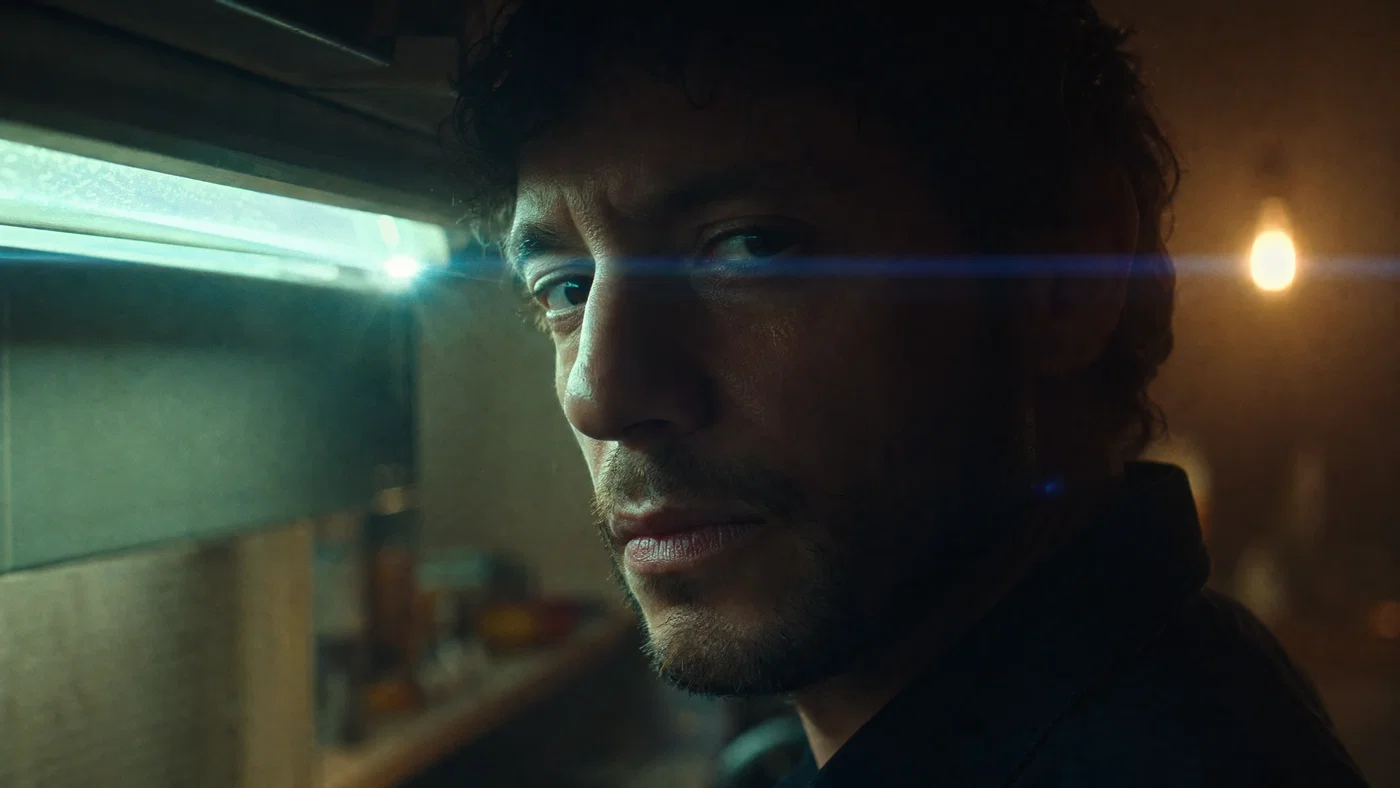
Widescreen extreme close-up with fluorescent practical key and strong horizontal anamorphic flare.
04·Film still · widescreen intimacy
View photo
50mmf/2Anamorphic flareTeal-and-orange
Prompt
Extreme close-up portrait, 50mm lens, f/2, 2.39:1 framing, subject in a dim kitchen, practical fluorescent under-cabinet strip as hard side key, second practical tungsten bulb in background for bokeh, thin haze to produce a pronounced horizontal anamorphic flare across the eyes, fine skin texture, *Vision3 500T* film stock look, teal-and-orange cinematic grade with rich contrast.
Why it works

The widescreen aspect and extreme close-up immediately read like a film still rather than a standard headshot. Mixing cool fluorescent key with warm practical bokeh gives color separation the grade can amplify, which is why teal-and-orange feels earned instead of pasted on.

Prompt 05 of 10

Night car interior

Thriller · dashboard glow
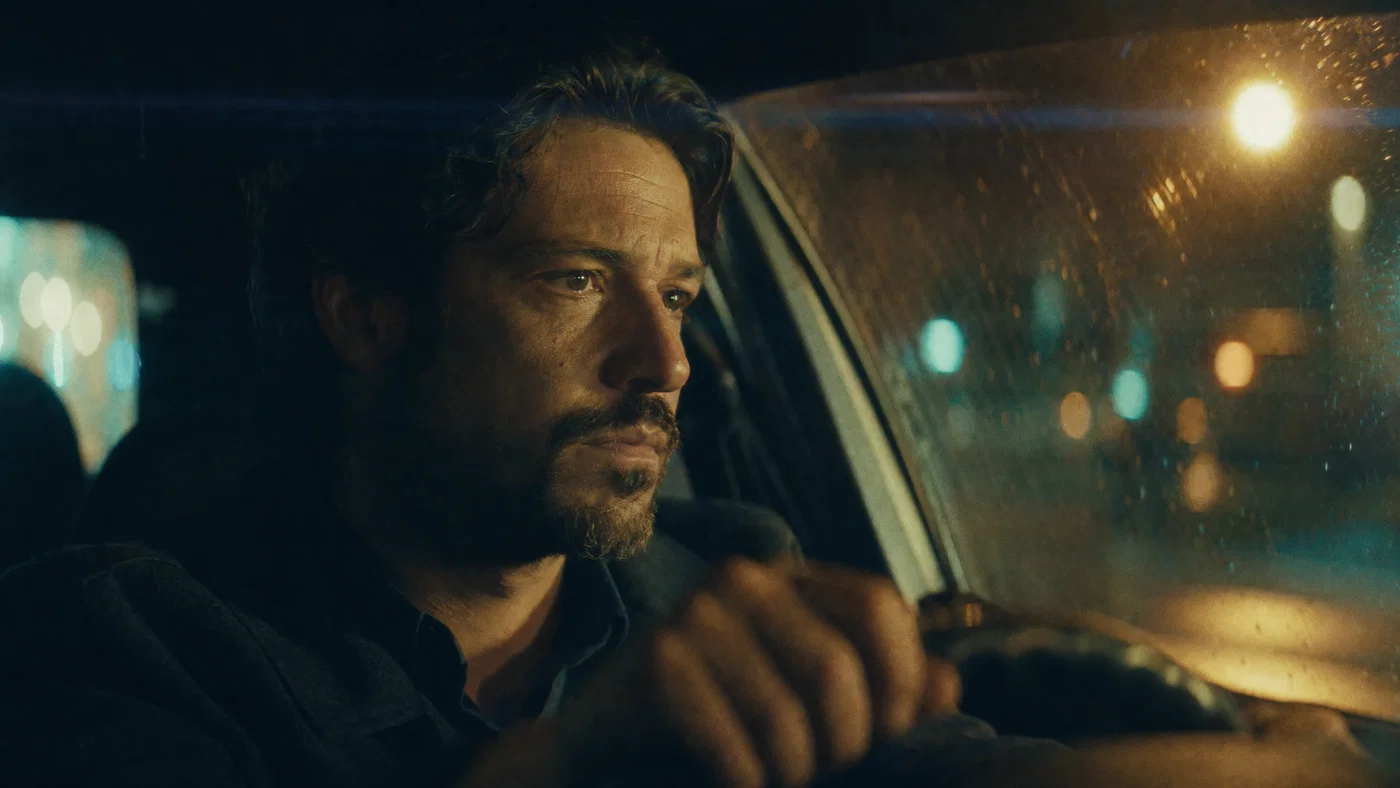
Night car interior portrait lit by dashboard glow with streetlight streaks and bokeh.
05·Thriller · dashboard glow
View photo
35mmf/1.4Dashboard practicalNight bokeh
Prompt
Medium close-up portrait, 35mm lens, f/1.4, subject in the driver seat, eyes forward, practical dashboard LEDs as low key fill, passing streetlights creating moving highlights on face, wet windshield catching a thin horizontal anamorphic flare, shallow depth of field with city bokeh outside, *Vision3 500T* film stock look, teal shadows with warm highlights grade.
Why it works

A 35mm inside a car keeps enough context to sell the location, while f/1.4 gives believable night exposure and bokeh. Naming dashboard light plus streetlight streaks creates motivated, cinematic highlight patterns that modern image models can render consistently.

Prompt 06 of 10

Diner booth

Indie drama · tungsten and neon
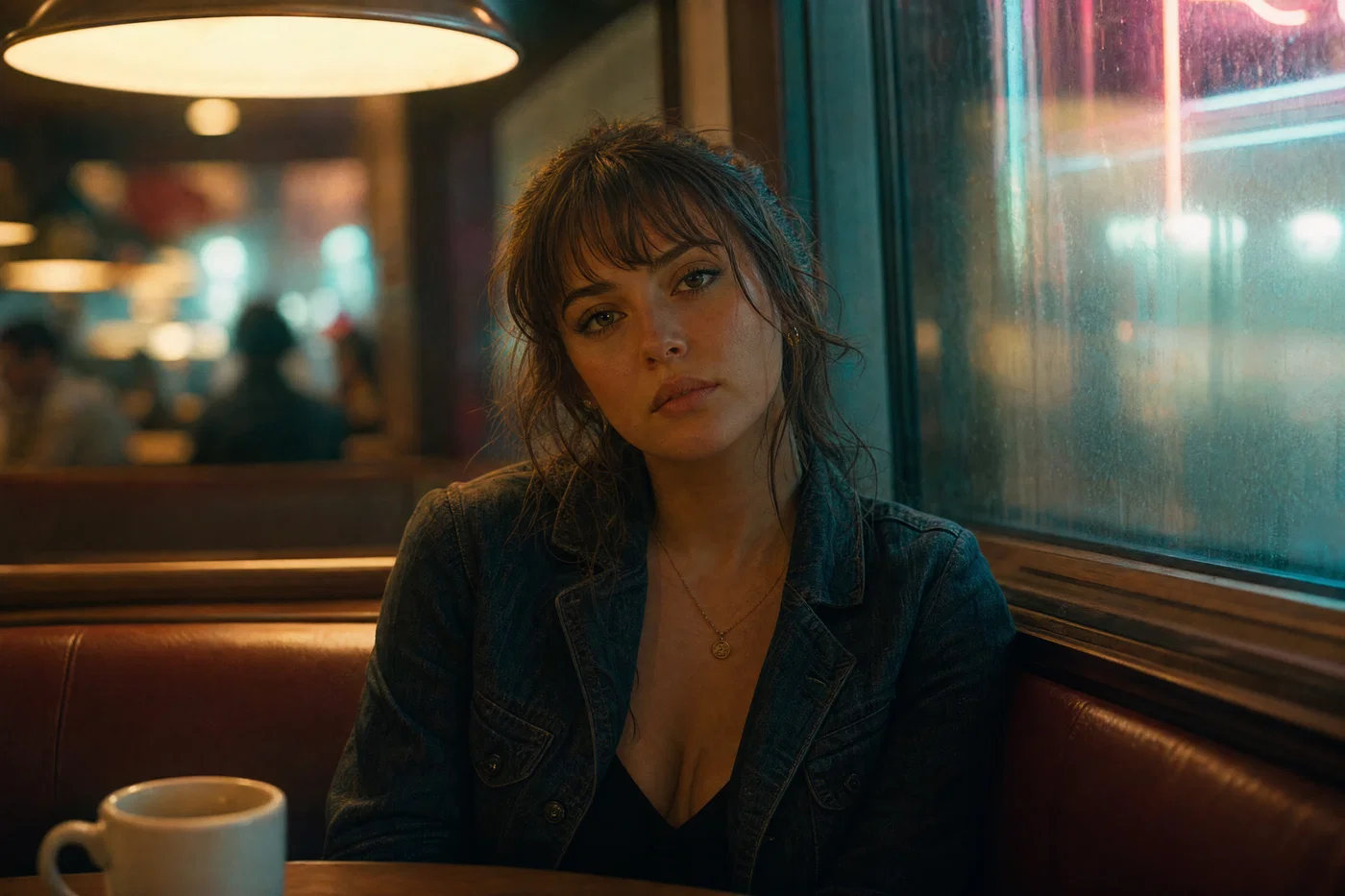
Diner booth portrait with tungsten pendant key, neon rim light, and soft background blur.
06·Indie drama · tungsten and neon
View photo
50mmf/1.8Tungsten practicalGold 200
Prompt
Waist-up portrait, 50mm lens, f/1.8, subject seated in a diner booth, practical tungsten pendant as top key, window neon sign outside as colored rim light, condensation on glass, soft haze to catch a subtle anamorphic flare, background patrons as gentle blur, *Gold 200* film stock look, warm tungsten skin tones with cool cyan shadows grade.
Why it works

The 50mm waist-up framing gives a natural perspective that reads like a real camera in a tight space. Two motivated practicals, tungsten overhead and neon rim, create a lighting diagram the model can follow, which keeps the scene coherent across variations.

Prompt 07 of 10

Projector portrait

Editorial · textured light
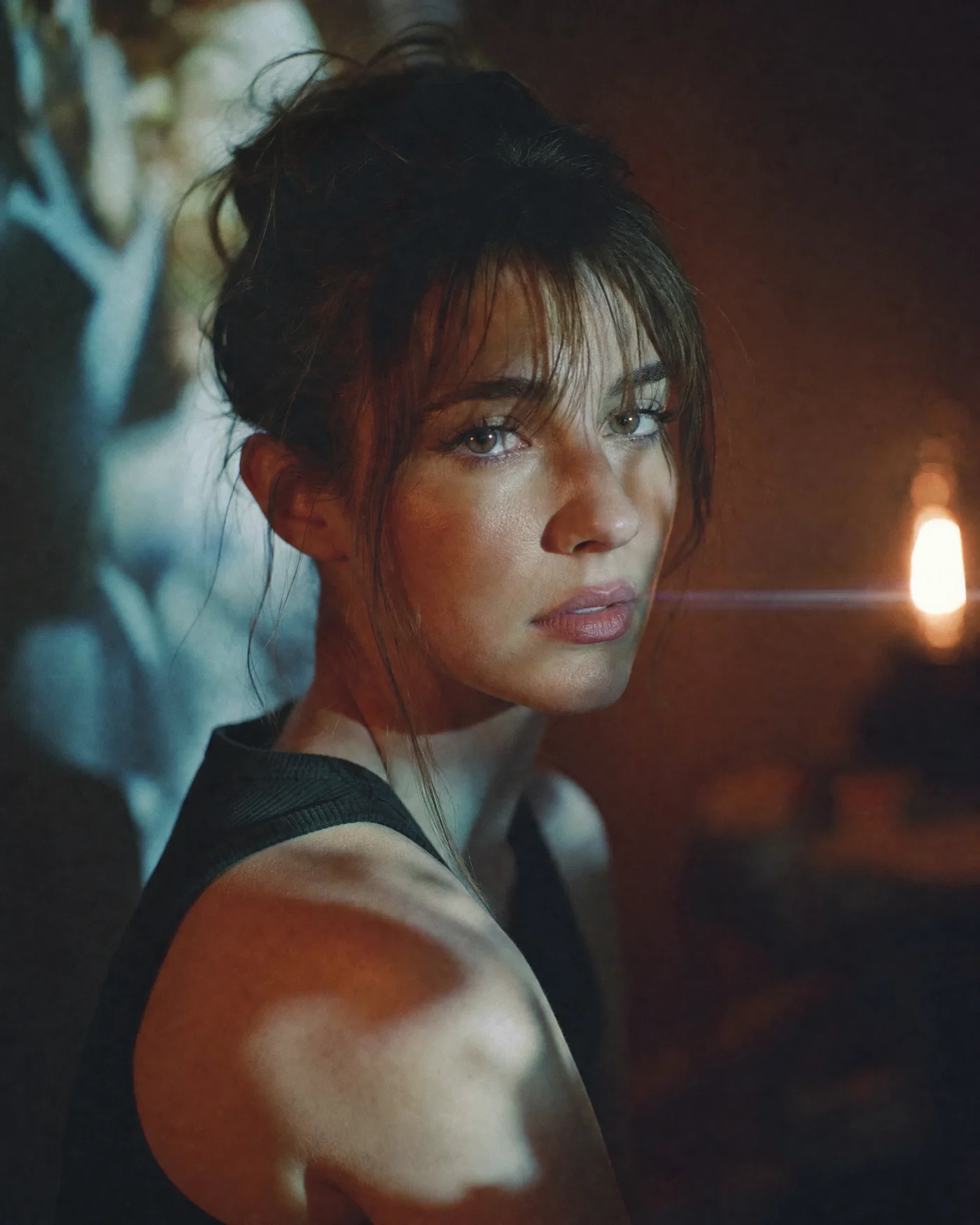
Portrait with projector light pattern across face, soft haze, and film-like grain.
07·Editorial · textured light
View photo
85mmf/2Projector practicalPortra 800
Prompt
Tight portrait, 85mm lens, f/2, subject in a dark room, practical projector casting a soft-focus film frame across face and shoulders, small tungsten practical in background for depth, slight haze to add a thin horizontal anamorphic flare line, sharp catchlights, controlled shadow falloff, *Portra 800* film stock look, muted contrast with gentle grain grade.
Why it works

Projector light gives complex, readable patterns that instantly feel cinematic and motivated, like a scene lit on set. The long lens keeps the projected texture clean and minimizes background distractions, which helps the model avoid messy, random shapes.

Prompt 08 of 10

Rooftop blue hour

Action-drama · city glow
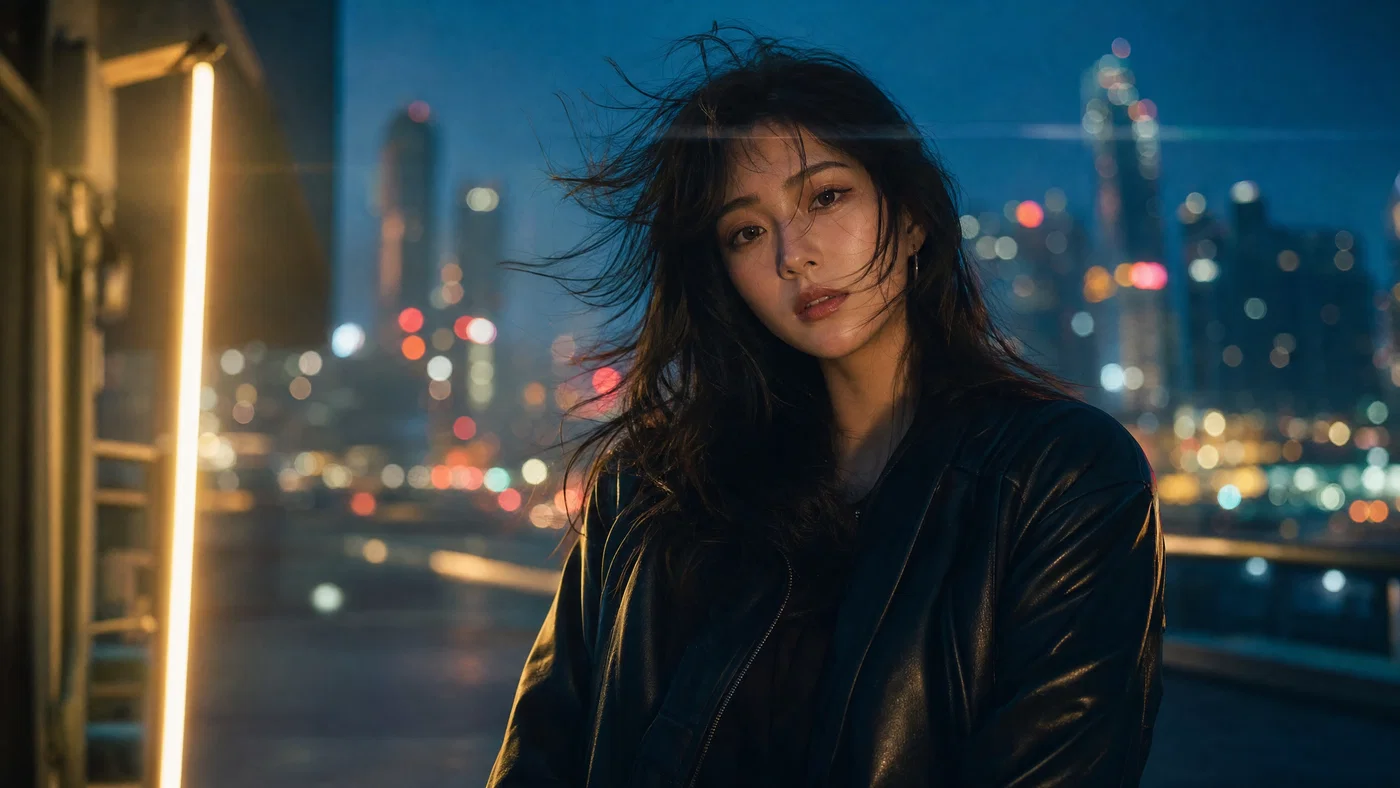
Blue-hour rooftop portrait with city bokeh, LED side key, and subtle anamorphic flare.
08·Action-drama · city glow
View photo
35mmf/2Blue hourLED tube key
Prompt
Environmental portrait, 35mm lens, f/2, subject on a rooftop at blue hour, city skyline bokeh behind, practical LED tube as soft side key, distant streetlights adding rim highlights, light wind moving hair, thin haze for a gentle anamorphic flare streak, crisp facial detail, *Vision3 250D* film stock look, teal-and-orange cinematic grade with clean blacks.
Why it works

Blue hour plus a named LED tube key gives controllable color contrast, cool ambient with warm skin, that feels like a real lighting setup. The 35mm keeps the skyline readable, which is crucial for a cinematic portrait that carries story context.

Prompt 09 of 10

Candlelit period

Period drama · warm falloff
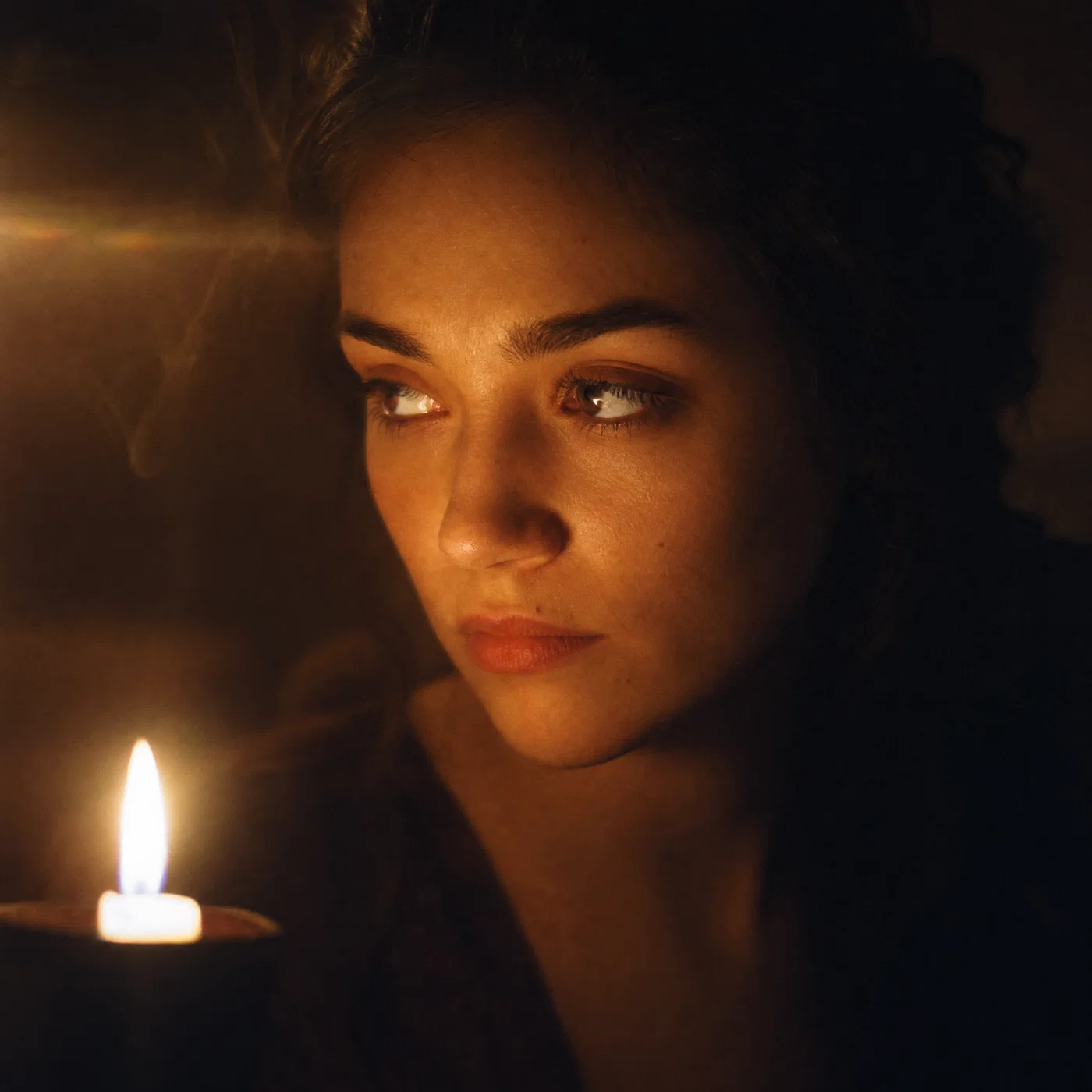
Candlelit close-up portrait with warm amber glow, deep shadows, and subtle smoke haze.
09·Period drama · warm falloff
View photo
85mmf/1.4Candle practicalAmber highlights
Prompt
Close-up portrait, 85mm lens, f/1.4, subject in a dark room, single practical candle as key placed just below eye level, soft bounce from a nearby wall as fill, deep falloff into shadow, faint smoke for a restrained anamorphic flare glint, natural skin texture, *Portra 400* film stock look, warm amber highlights with velvety shadows grade.
Why it works

Low, warm practical light creates a believable motivation and a distinctive shadow pattern that reads instantly as cinematic. The 85mm at f/1.4 keeps the background from competing and forces the model to prioritize facial structure and catchlight placement.

Prompt 10 of 10

Locker room grit

Sports noir · harsh practicals
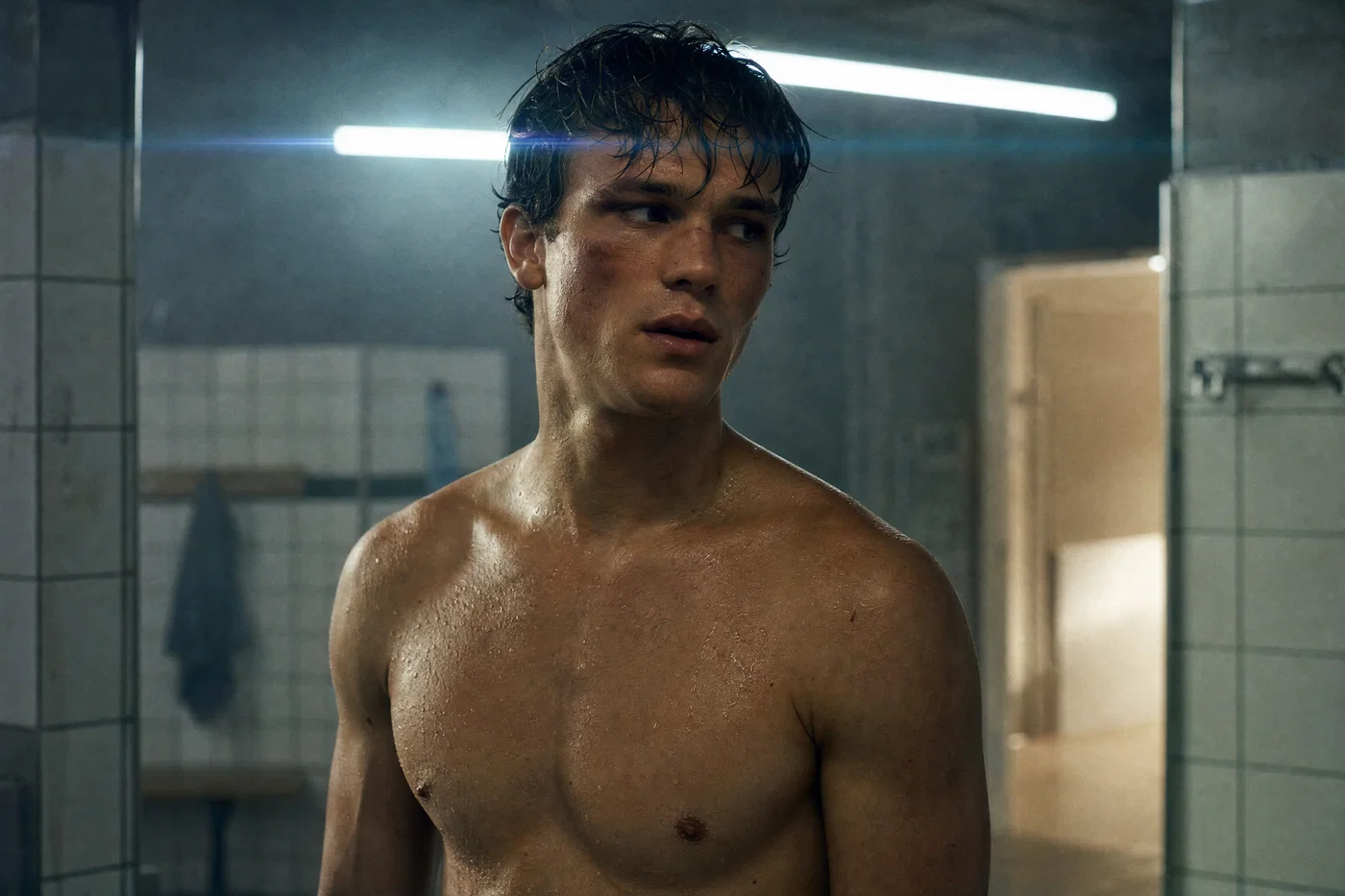
Gritty locker room portrait under fluorescents with steam haze and subtle horizontal flare.
10·Sports noir · harsh practicals
View photo
50mmf/1.8Overhead fluorescentsGritty texture
Prompt
Medium portrait, 50mm lens, f/1.8, subject standing in a tiled locker room, practical overhead fluorescent fixtures as top light, slight side fill from an open door spill, damp air and light steam for atmosphere, thin horizontal anamorphic flare from a bright fixture edge, sharp texture on skin and fabric, *Vision3 500T* film stock look, desaturated teal shadows with warm skin grade.
Why it works

Overhead fluorescents create hard, honest shadowing that feels like a real location, not a studio. Calling out steam, door spill, and fixture-edge flare gives the model specific causes for atmosphere and streaking, which makes the scene consistent and controllable.

Turn a prompt into a film-still portrait

Cinematic portraits come from constraints: pick the shot, lock the lens and aperture, motivate the light with real practical sources, then finish with a clear film-stock look and grade. When your prompt reads like a crew note, modern image models stop guessing and start executing.

Reuse these prompts as templates. Swap wardrobe, location, and story beat, but keep the same 35mm to 85mm lens choices, f/1.4 to f/2 depth of field, and motivated practical lighting. If a result feels “generated,” tighten the light direction, add negative fill, or specify the single brightest practical that should drive the flare.

When you are ready to render a clean set of movie-style photos, paste a prompt into Postcrest, generate variants, then export with a full commercial license and no watermarks. If you want to test the workflow end-to-end, open Postcrest and apply the first-month intro discount from the current offer details on the pricing page, then Open Postcrest.

Bonus · Image to video

Bring cinematic portraits to life as video

Any still you render from these prompts can become a motion clip in Postcrest while preserving the original lens feel, lighting motivation, and color grade.

Generated from prompt aboveImage to video in Postcrest
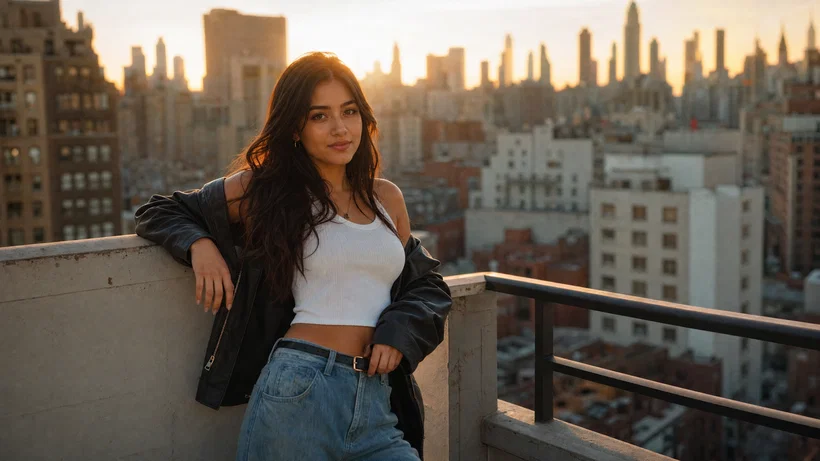
Animated from: Rooftop blue hour
Action-drama · city glow
Video prompt
Slow pan across the rooftop ending on the subject, preserve the 35mm blue-hour ambient, LED key, and teal-and-orange grade; animate hair moving in wind, haze drifting, and distant city light twinkle. Subject shifts weight slightly, one continuous shot, no cuts, no text, no watermarks, no logos, no overlays, no captions
Why it works as motion

A slow pan feels like a surveillance or establishing move, which fits rooftop energy while keeping the portrait readable. Wind and haze provide gentle motion cues that sell height and atmosphere without altering the clean, cinematic grade.

50% off first month

Generate every prompt above in Postcrest

Copy-paste any prompt, or hit generate and get a 4K render in seconds. 50% off your first month — join 38,000+ creators.

Claim 50% off
Cheat sheet

Cinematic portrait prompt cheat-sheet

Reference these dimensions in any prompt for repeatable results across shoots and projects.

LookLens + aperturePractical lightingFilm stock lookGrade cue
Low-key noir close-up85mm f/1.8Tungsten lamp + negative fillPortra 400Warm highlights, cool shadows
Neon street noir35mm f/1.4Neon sign + streetlightVision3 500TCyan-magenta, crushed blacks
Golden-hour backlight85mm f/1.4Sun rim + reflector fillPortra 400Warm glow, pastel shadows
Anamorphic widescreen close-up50mm f/2Fluorescent strip + tungsten bokehVision3 500TTeal-and-orange, rich contrast
Night interior thriller35mm f/1.4Dashboard LEDs + streetlight sweepsVision3 500TTeal shadows, warm highlights
Warm practical interior drama50mm f/1.8Tungsten pendant + neon rimGold 200Warm skin, cool cyan shadows
Pro tips

Five rules that separate amateur prompts from director-grade ones

  1. 01
    Lead with shot, lens, aperture
    Start your prompt like a camera note: “close-up portrait, 85mm, f/1.4.” This anchors depth of field and perspective before you describe mood or story.
  2. 02
    Name one motivated key light
    Pick the main practical source and state its direction, such as “neon side key” or “tungsten sconce at 45 degrees.” Clear motivation prevents random shadow placement.
  3. 03
    Add fill and negative fill explicitly
    If you want sculpted faces, say where fill comes from and where it does not. “Silver reflector fill” and “negative fill on shadow side” are simple, repeatable controls.
  4. 04
    Specify flare cause, not just flare
    Ask for anamorphic flare by giving a bright source and a reason, like “fluorescent strip causing a horizontal flare streak.” That keeps the flare consistent and believable.
  5. 05
    Finish with film stock and grade
    End with a film-stock look and a single grade target, such as “Vision3 500T look, teal-and-orange grade.” The model treats the ending as the final render intent.
Why Postcrest

Built for prompt-driven content at scale

Every prompt below renders natively in Postcrest. No queue, no Discord, no LoRA training.

Batch variations fast
Generate multiple compositions, wardrobes, and lighting tweaks in one session without losing the cinematic look you dialed in.
Consistent AI characters
Keep a recognizable face across a sequence of film-still portraits, perfect for campaigns, series, and story-driven posts.
Built-in editing workflow
Refine the final image with practical adjustments so skin tone, contrast, and grain match your intended film still aesthetic.
Stills to motion clips
Turn any portrait into a motion shot using the same prompt logic, preserving lens feel, light motivation, and grade.
Aspect ratios for every platform
Render widescreen 2.39:1 frames for cinematic posts, then quickly spin out 4:5 and 1:1 crops for social without re-prompting from scratch.
FAQ

Questions, answered

Everything you'd ask before pasting these prompts into your workflow.

A cinematic AI portrait prompt reads like a film still brief: shot type, 35mm to 85mm lens, f/1.4 to f/2 aperture, motivated practical lighting, a film-stock look, and a final color grade. The more you describe light direction and the single brightest practical, the more “shot, not generated” the result feels.

Martin Balk
Written by
Martin Balk
Founder, Postcrest

Martin builds AI tools that help creators, agencies and brands ship professional content without a studio. He has tested every frontier image and video model since 2022.

50% off first month

Paste a prompt, get film-still portraits

Generate consistent cinematic portraits, animate them into motion, and publish faster. Built for creators who want control, not randomness.

4.8 / 5 · Trusted by 38,000+ creators
Commercial license included
No watermarks ever
Image to video
Intro first-month discount
Start now